
Scally Growth PARTNER™
Business Operations Consulting for Growing Companies
Growth Partner™ provides ongoing business operations consulting for companies that have reached the point where simply working harder is no longer enough.
We help leadership teams identify operational bottlenecks, improve business processes, implement systems and automation, and continuously improve the way the business runs.
Built for growing bussinesses
Configured around your operations
Strategy before systems
Growth creates new
operational problems.
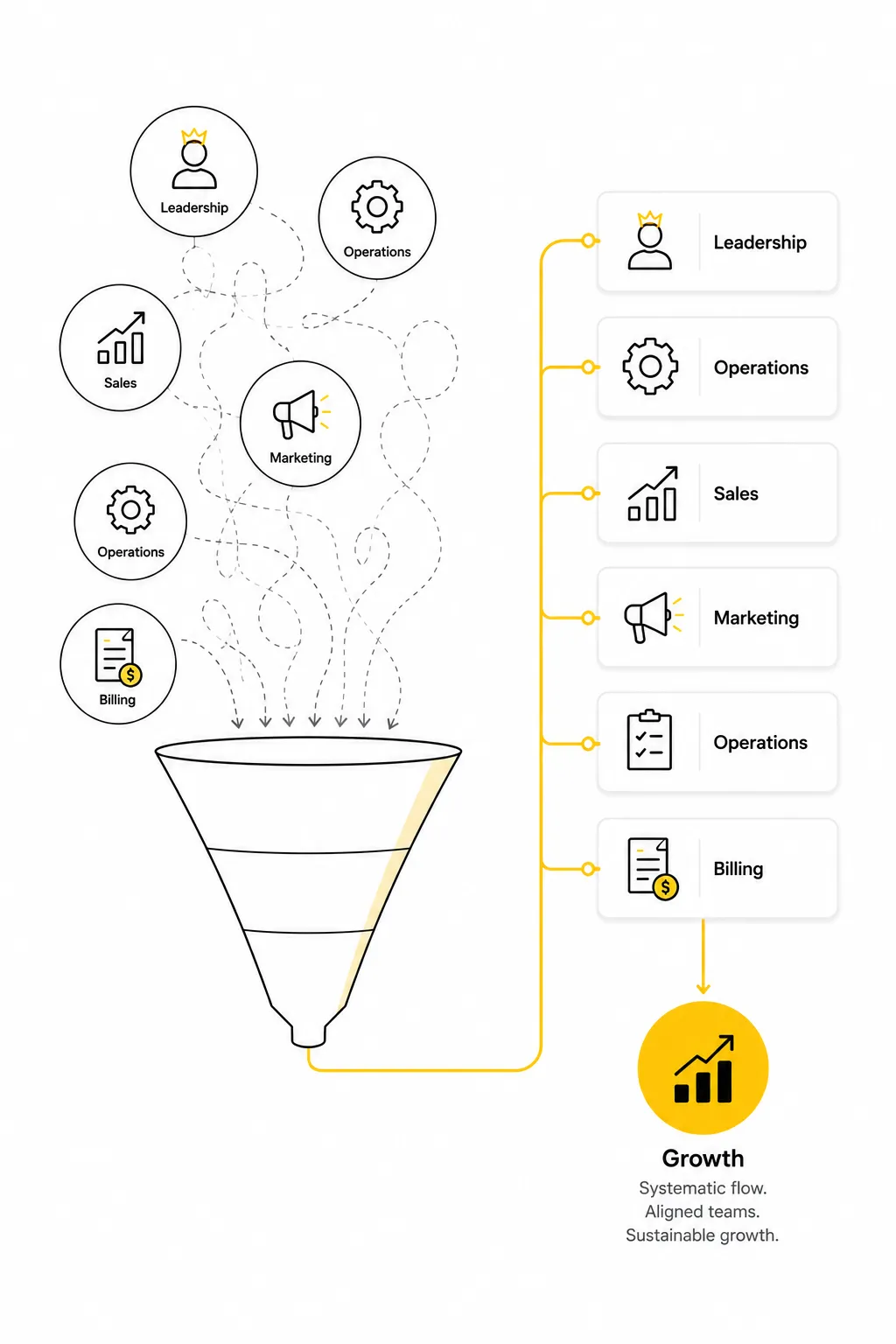
The processes that worked when the business was smaller can become slower, less consistent and increasingly dependent on the founder.
Scally Growth Partner™ provides ongoing business operations consulting for companies that have reached the point where simply working harder is no longer enough.
We work alongside leadership to identify operational constraints, improve sales and customer processes, optimise systems and automation, and continuously improve the way the business runs.
The goal isn't to make the business more complicated. It's to make it easier to run as it grows.
What Business Operations Consulting Covers
Business Systems
CRM, sales systems, customer management, project management and operational platforms.
Business Processes
Process design, documentation, standardisation and optimization.
Automation
Workflow automation and reduction of repetitive manual work.
Reporting & Visibility
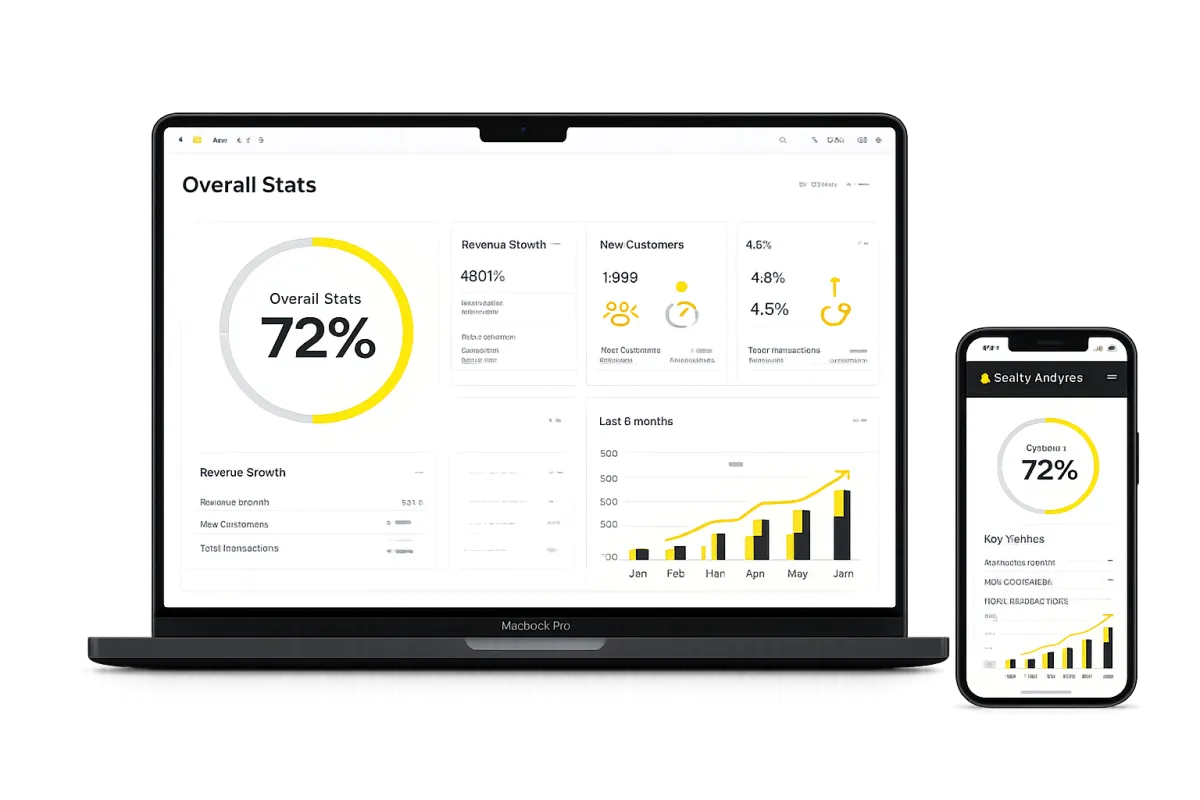
Dashboards, management information and operational reporting.
System Integration
Connecting systems so information flows between teams and platforms.
Sales & Customer Operations
Lead management, follow-up, onboarding and customer processes.
A Fractional Operations Partner Without Adding Another Executive
Growth Partner™ gives growing companies access to ongoing operations expertise without immediately adding another full-time executive to the organization.
The engagement can combine operational analysis, systems consulting, process improvement, automation, management visibility and implementation support.
Business Systems Consulting
Your systems should support the way your business operates, not force your team to work around disconnected tools.
Scally reviews your existing systems, identifies gaps and unnecessary complexity, and helps design the operating environment required to support the next stage of growth.
Where implementation is required, Scally can configure and connect the systems as part of the wider transformation programme.
What Does a Business Operations Consultant Look For?
A business operations consultant should look beyond obvious inefficiencies and identify the operational constraints underneath them.
Founder Dependency
What still requires the founder's involvement?
Could those decisions or processes be transferred to the team?
Process Friction
Where are employees spending unnecessary time?
Where are handovers breaking down?
Information Gaps
What information is difficult to access?
Where are teams working from different sources?
Sales Leakage
Where are leads, opportunities, or follow-ups being lost?
Customer Friction
Where does the customer experience become inconsistent?
Reporting Gaps
What does leadership need to know but currently cannot see easily?
System Disconnect
Which systems are creating duplicate work or fragmented information?
Growth Constraints
What would become a problem if the company grew by another 25%, 50%, or 100%?
These questions help identify the constraints that may not be obvious from the financial results alone.
What Is Scally
Growth Partner™ works on?
Scally Growth Partner™ is our business operations consulting and transformation programme for growing companies.
We work with leadership teams to understand how the business operates today,
identify where performance is being restricted, and determine what needs to change.
The work can cover:
Business Operations
How work moves through the organisation, who owns it, and where bottlenecks occur.
Processes
How important activities are performed, documented, standardised, and improved.
Sales Operations
How leads, opportunities, follow-up, customer information, and sales activity are managed.
Customer Operations
How customers move through the business and how communication and service delivery are managed.
Systems
How CRM, communication, reporting, project management, and other systems support the operating model.
Management Visibility
What leadership needs to know to make faster and better decisions.
Automation
Where repetitive processes can be reduced or automated without compromising the customer or employee experience.
The result is a clearer operating structure and a practical plan for improving it.
From Operational Problems to a Business Growth Roadmap
Business operations consulting should not stop at identifying problems. Growth Partner™ turns operational findings into a prioritised roadmap for improving systems, processes, automation and execution.
Growth Partner™ begins with a structured operational review and prioritised improvement roadmap. Where larger implementation work is required, Scally can move into Growth Accelerator™ to build and deploy the required systems.
01. Review
What's happening across the business?
02. Diagnose
Where are revenue and efficiency being lost?
03. Prioritize
Which improvements matter commercially?
04. Improve
What should we change, automate or simplify?
05. Measure
Did it actually improve performance?
06. Repeat
What should we improve next?
This creates a clear path from execution to optimization.
What Growth Partner Actually Changes
Depending on the organisation, the engagement can lead to:
More Sales Visibility
Know what's happening across the pipeline without chasing updates.
Less Founder Dependency
Reduce the number of decisions and processes that still require the founder.
Better Follow-Up
Make sure opportunities don't disappear because someone forgot to follow up.
Better Processes
Create consistent ways of working across the team.
Less Manual Work
Automate repetitive activities that don't require human judgement.
Better Reporting
Give leadership a clearer view of performance.
Continuous Improvement
Keep improving the business as it grows.
When You Need the Scally Growth Partner™
Growth Partner™ is for businesses that already have something working, but know it could work better.
You may be ready if:
Revenue is growing but operations are becoming harder to manage
Your sales pipeline needs more visibility
Leads are not consistently followed up
The founder is still involved in too many decisions
Your team relies on manual processes
Your CRM isn't being used effectively
Reporting takes too long
Sales and operations aren't fully connected
You need to improve efficiency before hiring more people
You want an experienced strategic partner without hiring another executive
Before You Add More People, Fix the Operating System
Scally separates diagnosis and strategy from implementation.
A business can respond to growth problems by hiring.
More salespeople.
More administrators.
More managers.
More software.
Sometimes that's the right answer.
But sometimes the problem isn't capacity.
It's the system.
Scally Growth Partner™ looks at the operation first.
Where are leads being lost?
Where is the team spending unnecessary time?
Where is the founder still acting as the bottleneck?
What should be automated?
What should be simplified?
What should actually be owned by a person?
Then you make the hiring decision with better information.
That is very aligned with the new Scally positioning.
FAQ
What Is Business Operations Consulting?
Business operations consulting helps growing companies improve how work, information, systems and processes move through the organisation. It can include process improvement, systems consulting, automation, reporting, operational planning and ongoing optimisation.
What Does a Business Operations Consultant Do?
A business operations consultant analyses how a company currently operates, identifies bottlenecks and inefficiencies, and helps leadership improve processes, systems, automation, reporting and operational execution.
When Should I Hire a Business Operations Consultant?
Businesses often engage an operations consultant when growth is creating operational complexity, founder dependency, inconsistent processes, manual work, poor visibility or disconnected systems.
Who Can Help Me Streamline My Business Operations?
A business operations consultant or operations consulting partner can assess the current operating model, identify process constraints and help implement improvements across systems, workflows and team processes.
Who Can Build Business Systems for My Company?
A business systems consultant or implementation partner can design, configure and connect the systems required to support your operating model. Scally combines business systems consulting with implementation support.
How Do I Scale My Business Operations?
Scaling operations requires more than adding people. Businesses need repeatable processes, clear ownership, connected systems, appropriate automation and management visibility that can support increased volume.
What Does a Fractional Operations Consultant Do?
A fractional operations consultant provides ongoing operational expertise without requiring the company to hire a full-time operations executive. The work can include process improvement, systems, automation, reporting and operational planning.
What Is the Difference Between an Operations Consultant and a Business Coach?
A business coach typically focuses on leadership, decision-making and business development. An operations consultant focuses more directly on how the organisation works, including processes, systems, workflows, reporting and execution.
Consultant or Operating Partner?
Traditional consulting often ends with recommendations.
Growth Partner™ is designed for businesses that need continued operational support.
Consulting
Diagnose
Recommend
Plan
Growth Partner™
Diagnose
Design
Implement
Improve
Measure
Repeat
How the transition to
Growth Partner Happens
SCALLY INFRASTRUCTURE™
BUILD
Your sales and operating infrastructure.
SCALLY GROWTH ACCELERATOR™
IMPLEMENT
The systems, processes and automation are put into operation.
SCALLY GROWTH PARTNER™
OPTIMIZE
Ongoing business operations consulting, strategic advisory and continuous improvement.
Build → Implement → Optimise
Ready to Improve How Your Business Operates?
Let's identify what's creating friction, where your systems are holding you back and what needs to change next.
Copyrights 2026 | Scally Growth Partners™ | Terms & Conditions