
SCALLY case study: steady tracker
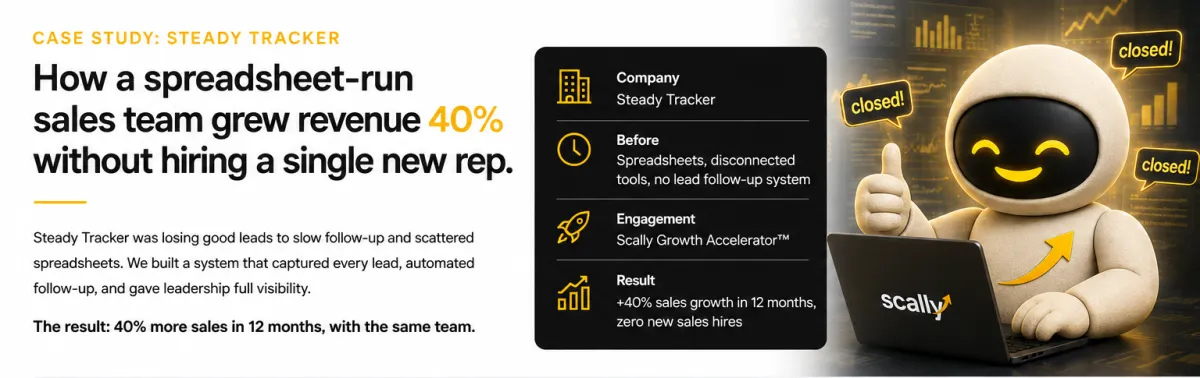
The Problem:
Good Leads, Slow Team
Steady Tracker wasn't short on demand. Leads were coming in, phone calls, form fills, referrals, the kind of interest most businesses would kill for. The problem wasn't generating leads. It was what happened after.
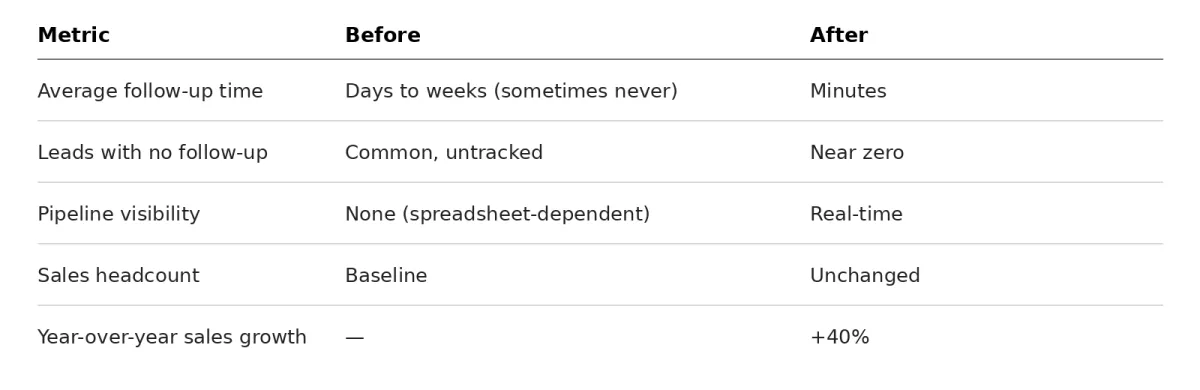
A lead would come in and land in an inbox, or a spreadsheet, or a sales rep's memory. From there, follow-up depended on who noticed it, when they had time, and whether anyone remembered to check back. Some prospects got a call within a day.
Others waited weeks. Some never heard back at all, not because anyone decided not to follow up, but because nobody's job was to make sure it happened.
By the time Steady Tracker came to us, the pattern was clear: they weren't losing deals to competitors. They were losing them to silence.
What We Found
We didn't start with a pitch. We started with a diagnosis, the same way we approach every engagement: find out exactly where revenue is leaking before proposing anything.
Across a few weeks of working through their actual sales process, three things stood out:
1. No system, just people. Every lead's fate depended on which rep touched it and whether they remembered to follow up. There was no structure ensuring a lead got contacted, let alone nurtured.
2. No visibility. Leadership had no reliable way to see how many leads were in the pipeline, how old they were, or which ones were going cold. Problems weren't visible until they showed up in the quarterly numbers, by which point the deal was long gone.
3. The instinct was to hire. Steady Tracker's plan, before working with us, was to add headcount, more reps to manually cover more leads. It's the natural response to "we're missing follow-ups." It's also the expensive way to solve a systems problem with a people budget.
That last point mattered most. More reps wouldn't have fixed the actual issue, an absence of process. It would have just added more people to the same broken workflow.
What We Built
Instead of adding headcount, we built the infrastructure that made their existing team's time count for more.
Automated lead capture and routing — every lead, from every channel, landed in one place instead of scattered across inboxes and spreadsheets.
We first understand:
A structured follow-up sequence — leads were automatically nurtured through email and call reminders, so a prospect never sat untouched waiting for someone to remember them.
Pipeline visibility for leadership — a live view of every lead's status, age, and next action, replacing the quarterly surprise with a weekly check-in.
Lead scoring and prioritization — the system surfaced which prospects were actually ready to buy, so reps spent their time closing instead of chasing.
The shift wasn't about working harder. It was about making sure every lead got the follow-up it needed, automatically, so the team's time went to the conversations that were actually ready to happen.
The Result
Sales grew 40% in the following year, with the same headcount Steady Tracker started with.
"We were about to hire two more salespeople to keep up. Turns out we didn't need more people, we needed the ones we had to stop losing leads in the cracks. That was the real fix."


The team didn't get bigger. It got fed better.
Instead of every rep splitting their time between chasing cold leads and working warm ones, the system handled the chasing, and handed reps prospects who were already warmed up and ready to talk.
The Result
The instinct to solve a follow-up problem by hiring more people is common, and understandable. But headcount doesn't fix a process that doesn't exist, it just adds more people operating inside the same gap.
Steady Tracker's growth didn't come from more effort. It came from making sure the effort that was already happening never got lost, followed by a system that made sure every lead got exactly the attention it needed, at the moment it needed it, without anyone having to remember to make that happen.
If your team is losing deals to slow follow-up, not lack of demand, this is worth a conversation.
Copyrights 2026 | Scally Growth Partners™ | Terms & Conditions
Facebook
LinkedIn
Youtube