
SCALLY SALES INFRASTRUCTURE
The Sales Infrastructure
Behind Your Growth
A connected system for how your sales actually get won.
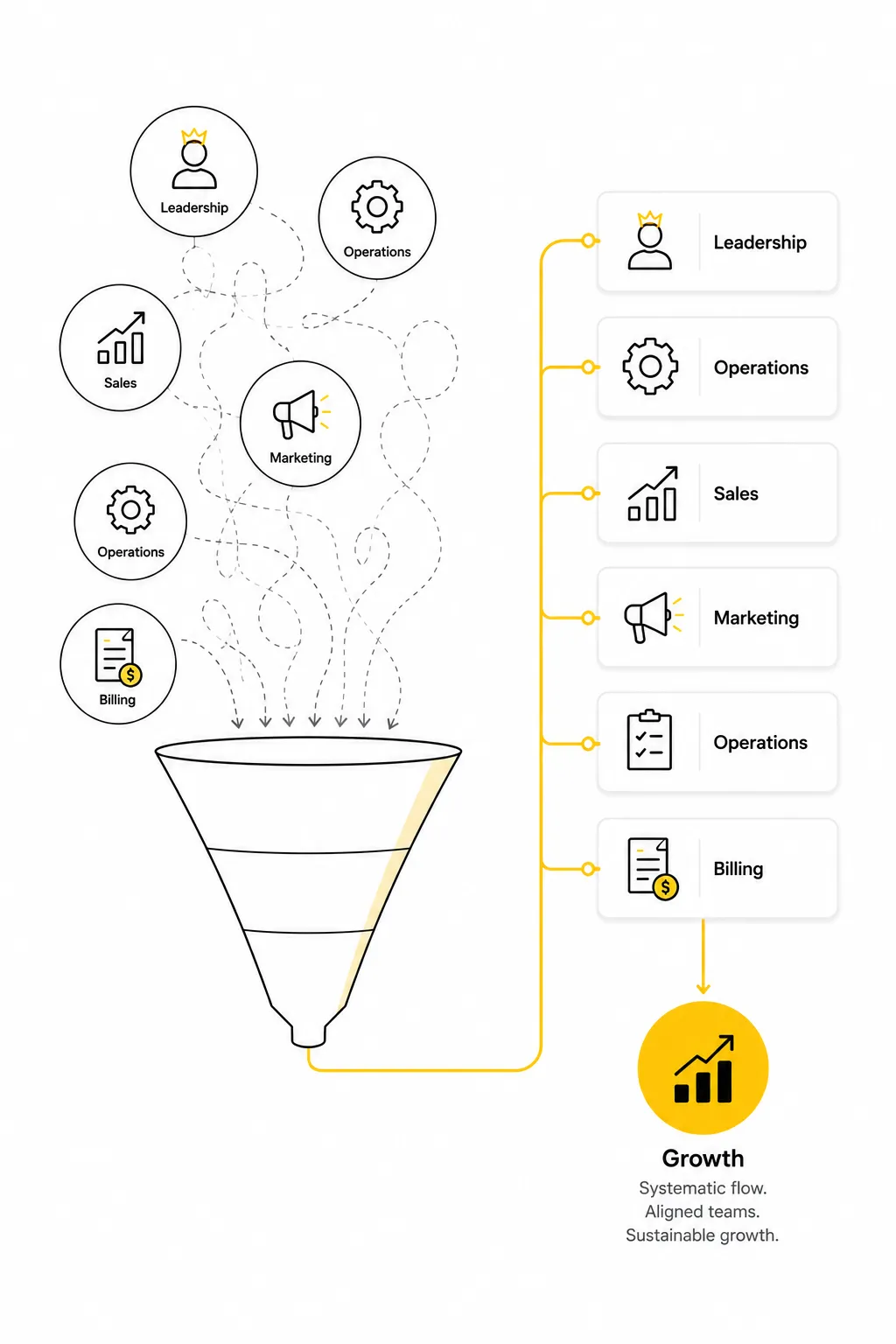
Built for growing bussinesses
Configured around your operations
Strategy before systems
How This Makes You
More Money
You're not short on demand.
You're short on a system that turns that demand into closed revenue.
Faster follow-up closes more of the leads you're already generating, most deals are lost to slow response time, not a better competitor.
Real-time visibility catches stalling deals while they're still recoverable, instead of finding out at quarter-end that they went cold.
Fewer decisions bottlenecked through you means more of your time goes to selling and growing the business, not approving and chasing.
None of it requires hiring another rep. It requires the infrastructure that's currently missing.
Growth changes the way
sales needs to operate.
What works with a small team can become difficult to manage as leads, customers, and revenue increase.
Follow-up becomes inconsistent.
Pipeline information becomes fragmented.
Reporting takes longer.
More decisions come back to the founder.
Scally Sales Infrastructure brings the core systems behind your sales process into one connected environment.
It connects CRM, pipeline, follow-up, communication, workflows, reporting, and automation so your team has a clearer way to close what's already coming in.
Scally Sales Infrastructure is designed for founder-led and growing companies that have outgrown disconnected tools and manual follow-up, but do not want unnecessary complexity.
The objective is straightforward: Give leadership better visibility, give sales teams clearer processes, and give the business a stronger foundation to convert the demand it already has.
What Is Sales Infrastructure?
Sales Infrastructure is the connected structure through which a company manages its day-to-day sales and revenue activity.
It brings together the systems, processes, workflows, information, and reporting that sales teams rely on to close consistently.
Think of it as the operating layer between your sales strategy and every deal that actually gets worked.
It gives the business a consistent way to:
Capture · Manage · Communicate · Automate · Measure · Improve
Sales Infrastructure is therefore not simply another piece of software.
It is the way the business's key sales systems and processes work together.
Capture

Manage
Communicate
Automate
Measure
Improve
INTRODUCING
Scally Sales Infrastructure
One System for Everything Behind How You Sell
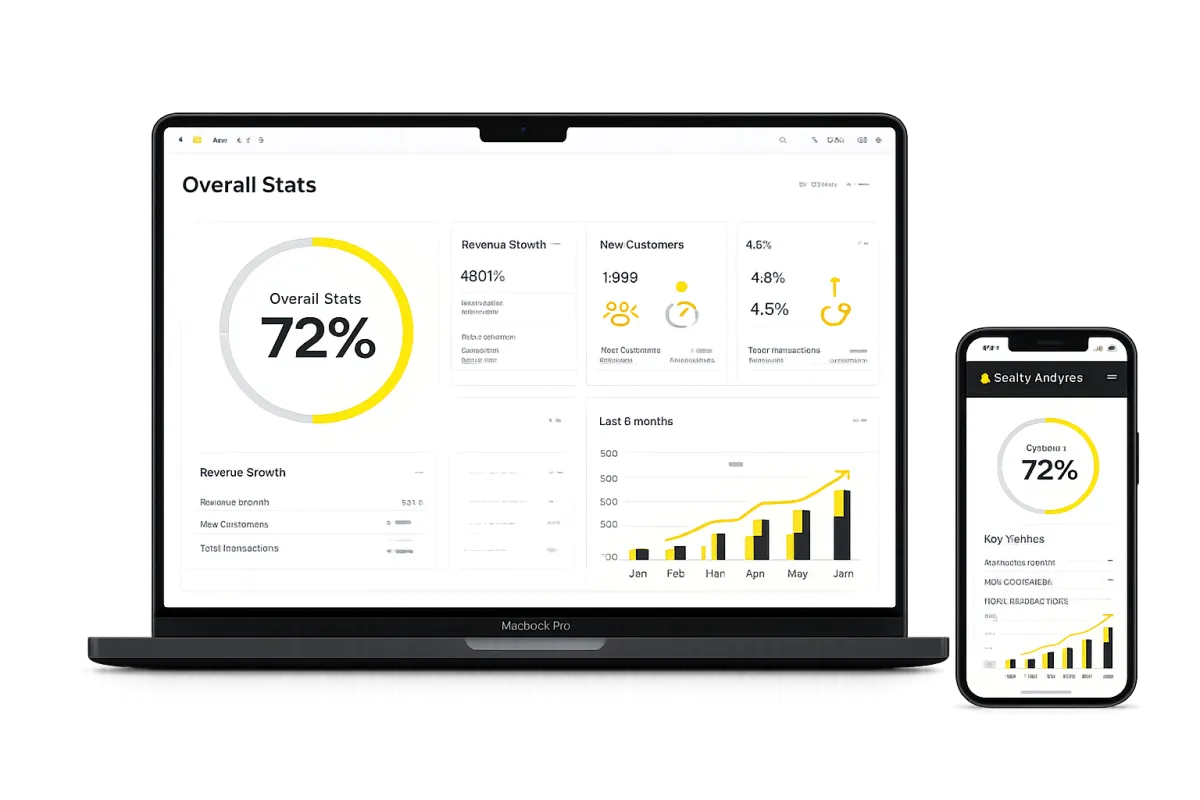
Scally Sales Infrastructure is our sales infrastructure solution for growing companies.
It brings together the core sales functions that often
become disconnected as a business grows.
CRM
A central record of prospects, customers, conversations, opportunities and activity.
Sales Pipeline
Structured pipelines, lead management, follow-up, quotations and sales processes.
Customer Management
Consistent communication, onboarding, customer
journeys and relationship management.
Workflows
Standardized processes that move work from one stage to the next without unnecessary manual intervention.
Communication
Connected email, notifications, internal processes and customer communication.
Reporting
Management visibility across pipeline activity, customer activity and key operational information.
Automation
Automated actions for repetitive processes such as follow-up, notifications, reminders and customer communication.
Rather than adding another system to your technology stack, Scally Sales Infrastructure creates a more connected environment around the processes that actually close revenue.
Designed Around How
Your Business Operates
Every business has different customers, teams, processes and priorities.
Scally starts with the business rather than the technology.
We first understand:
How your business currently operates
How customers move through the business
How sales opportunities are managed
How teams communicate
Where information is stored
Which processes are manual
Where decisions become bottlenecks
What leadership needs to see
Which systems are already working
From there, we establish the operating structure and configure Scally OS around the agreed processes.
This means the technology supports the operating model rather than dictating it.
From Disconnected Systems
to One Operating Environment
Before Scally
Website
↓
Lead Form
↓
CRM
↓
Spreadsheet
↓
↓
Sales Team
↓
Manual Follow-up
↓
Quote
↓
Invoice
↓
Reporting
Information moves between people and systems.
Someone has to remember what happens next.
After Scally Implementation
Website
↓
Lead Capture
↓
CRM
↓
Sales Pipeline
↓
Automated Follow-up
↓
Quote
↓
Customer
↓
Reporting
The process becomes structured, visible and repeatable.
The objective isn't to automate everything.
It is to make the important things happen consistently.
What Scally Sales Infrastructure Improves
Operational Visibility
Leadership can see what is happening across key areas of the business without relying on manual updates from multiple people.
Follow-up Consistency
Every lead gets followed up on the same reliable schedule, whether it's a
top rep's deal or one nobody's prioritized yet.
Customer Management
Customer information and communication are brought into a more structured environment.
Process Consistency
Important sales processes are defined and standardised so the team knows
what happens, when it happens, and who owns it.
Administrative Efficiency
Repetitive tasks can be automated where doing so creates genuine operational value.
Founder Independence
Processes, information and responsibilities become less dependent on the founder being involved in every decision.
Who This is For?
Scally Sales Infrastructure is designed for founder-led businesses with established teams that are becoming operationally complex.
It is particularly relevant when a business has:
- 5+ employees
- Multiple teams or departments
- A growing customer base
- Increasing sales activity
- Several business systems
- Manual follow-up
- Spreadsheet-based processes
- Limited management visibility
- Increasing administrative workload
- Too many decisions going back to the founder
You may not need Scally OS if your current systems already give you the visibility, consistency and operational control you require.
We would rather identify that early than recommend unnecessary change.
What Happens When You
Implement the Scally Infrastructure?
Scally follows a structured implementation process.
01. Discovery
We understand the business, objectives, current systems and operating model.
02. Business Audit
We identify operational constraints, disconnected systems, manual processes and areas of inefficiency.
03. Operating Strategy
We establish the processes, workflows, responsibilities and system structure required.
04. Implementation
Scally Sales Infrastructure is configured and the agreed processes are implemented.
05. Launch & Adoption
The system is deployed, the team is trained, and adoption is supported.
06. Optimization
Performance is reviewed and the operating environment is improved as the business develops.
This approach keeps strategy, implementation and adoption connected.
Is your business ready for the next stage?
Understand what's supporting your growth and what may be holding it back.
Before recommending Scally Sales Infrastructure, we recommend understanding where your business currently sits.
Our 3-minute Business Scalability Assessment evaluates areas including:
- Operational maturity
- Systems and processes
- Sales management
- Customer management
- Reporting
- Automation
- Founder dependency
- Scalability
You'll receive a business scalability score, an indication of your current operational maturity, and priority areas for improvement.
No obligation.
No software pitch.
Just a practical starting point.
Copyrights 2026 | Scally Growth Partners™ | Terms & Conditions