
SCALLY INSIGHTS
How to Improve Sales Follow-Up and Stop Losing Leads
Most businesses don't lose sales because they lack leads. They lose opportunities because follow-up is inconsistent, delayed or forgotten.
An enquiry comes in, but nobody takes ownership. A proposal gets sent, but nobody follows up.
A promising prospect disappears because the next step was never scheduled.
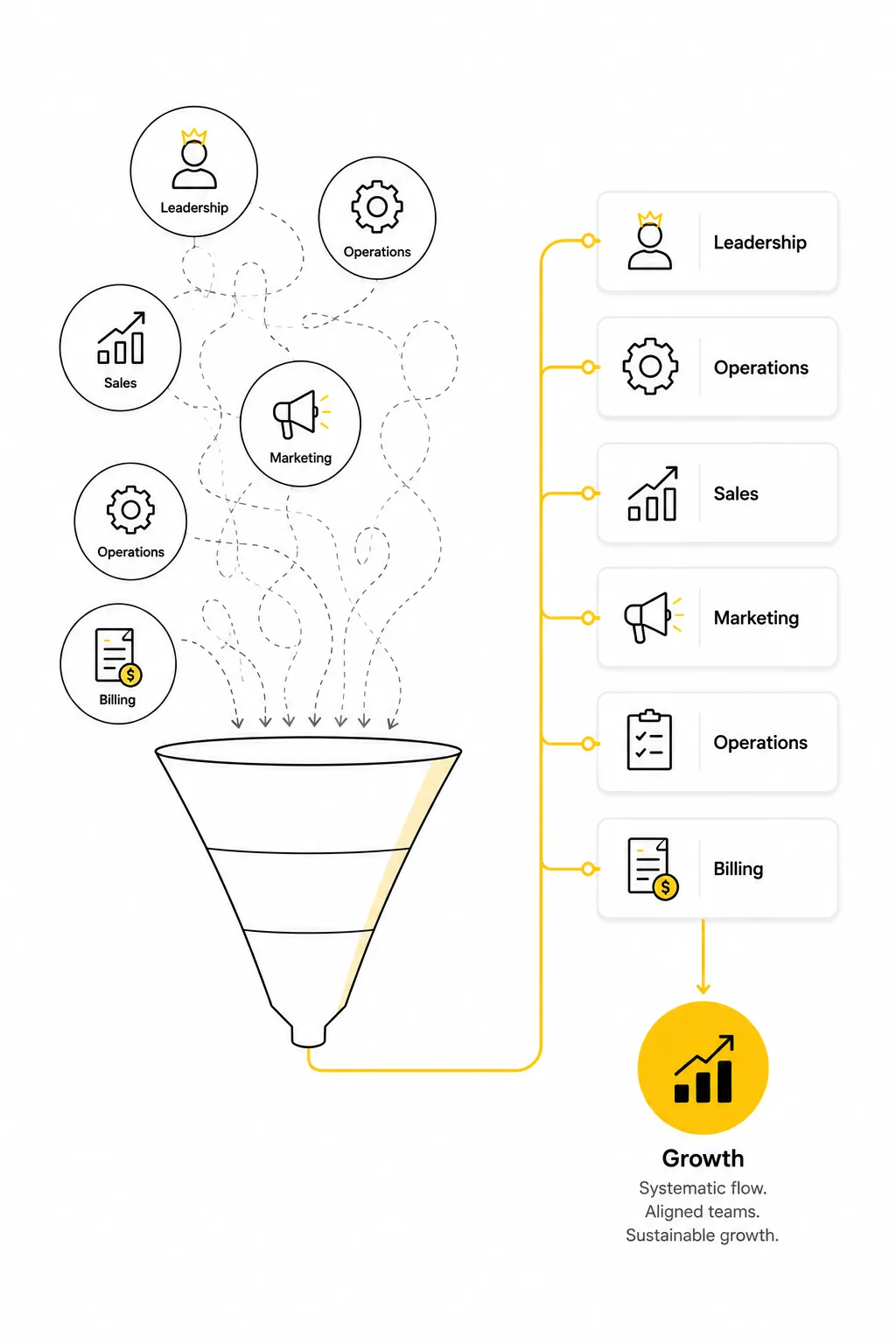
Improving sales follow-up isn't simply about asking your team to work harder. It's about building a connected system that makes sure every opportunity has an owner, a next step and a clear follow-up process.
That's where connected sales systems make a difference.

Why Businesses Struggle With Sales Follow-Up
Leads are not assigned immediately.
Salespeople rely on memory and manual reminders.
Follow-up activities are scattered across email, WhatsApp and spreadsheets.
Quotes and proposals are forgotten.
Management cannot identify stalled opportunities.
What Is an Effective Sales Follow-Up Process?
Capture the enquiry.
Assign ownership.
Notify the responsible salesperson.
Schedule the first contact.
Record the interaction.
Trigger the next follow-up.
Track the outcome.
How Sales Follow-Up Automation Works
Automation supports human sales conversations rather than replacing them.
- Assign incoming leads.
- Trigger notifications.
- Schedule reminders.
- Create follow-up tasks.
- Track unanswered enquiries.
- Flag stalled opportunities.
- Re-engage dormant prospects.
What Should Businesses Measure?
Average lead response time.
Percentage of leads contacted.
Follow-up completion rate.
Number of stalled opportunities.
Quote follow-up rate.
Lead-to-customer conversion rate.
How Scally helps speed up sales follow-up
Scally is a sales infrastructure consultancy focused on helping businesses turn more opportunities into revenue.
Rather than simply adding another automation, Scally looks at where opportunities are getting stuck:
Lead comes in → Who owns it? → What happens next? → When is it followed up? → What happens if they don't respond? → Where is the opportunity now?
Scally then builds the infrastructure around that process — connecting CRM, sales workflows, automation, communication and reporting so the team knows what needs to happen next.
The principle is simple:
Your sales team should be having conversations. Your system should handle the remembering.
Scally's own positioning centres on automating the things that should never be forgotten — including lead routing, follow-up reminders, pipeline movement, re-engagement and customer communication.
What makes this different from simply buying a CRM?
A CRM can store a lead.
Sales infrastructure makes sure something happens with that lead.
For example:
CRM: New enquiry is recorded.
Sales infrastructure: New enquiry is recorded → assigned → salesperson notified → follow-up scheduled → activity tracked → stalled opportunity flagged → management can see the outcome.
That's the difference between having sales data and having a sales system that moves revenue.
The real objective: faster follow-up and less revenue leakage
Speed matters, but the ultimate goal isn't simply responding faster.
It's capturing more of the revenue already being created by your sales activity.
If enquiries aren't followed up, quotes aren't chased, dormant prospects aren't reactivated or opportunities aren't clearly owned, revenue can leak between stages.
Scally helps businesses identify those gaps and build the infrastructure to close them.
How many opportunities are slipping through your sales process?
Let's identify where leads are getting stuck, where follow-ups are being missed and how better-connected systems can help your team capture more opportunities.
Copyrights 2026 | Scally Growth Partners™ | Terms & Conditions